
Australia is expensive.
There. I’ve said it.
If you’ve ever looked at taking your family to Australia from the UK, you’ve probably done the same thing.
Found some flights.
Looked at accommodation.
Added a hire car.
Started looking at all the incredible things you could do while you’re there.
Watched the total rapidly head towards the price of a small family hatchback.
And quietly closed the laptop.
But after travelling Australia ourselves as a family, I think there’s another way of looking at it.
Could a family of four leave the UK, spend four incredible weeks travelling Australia and come home having spent less than £10,000 in total?
Flights.
Accommodation.
Transport.
Food.
Experiences.
Everything.
And I don’t mean spending four weeks eating instant noodles, sleeping in the cheapest accommodation you can find and explaining to the kids that you’re only looking at the Great Barrier Reef because actually going there would ruin Dad’s spreadsheet.
I mean a proper family adventure.
Wildlife. Beaches. Road trips. National parks. Good food. And a few ridiculous bucket-list experiences thrown in for good measure.
The Australia you’ve spent 24 hours on a plane to see.
Having travelled Australia ourselves, made plenty of expensive mistakes and subsequently become considerably better at travelling, I genuinely think you can do it.
So let’s spend £10,000.
First Rule: Stop Trying to See Australia
This sounds ridiculous, but it’s probably the most important piece of advice in this entire article.
Australia is enormous.
Trying to see Sydney, Melbourne, Uluru, Brisbane, the Whitsundays and Cairns in four weeks doesn’t give you a better Australian holiday.
It gives you lots of airports.
Every time you move, you spend money.
Another flight. Another transfer. Another car. Another travel day.
And another chunk of your holiday disappears.
If we had four weeks and £10,000, we’d pick one part of Australia and travel it properly.
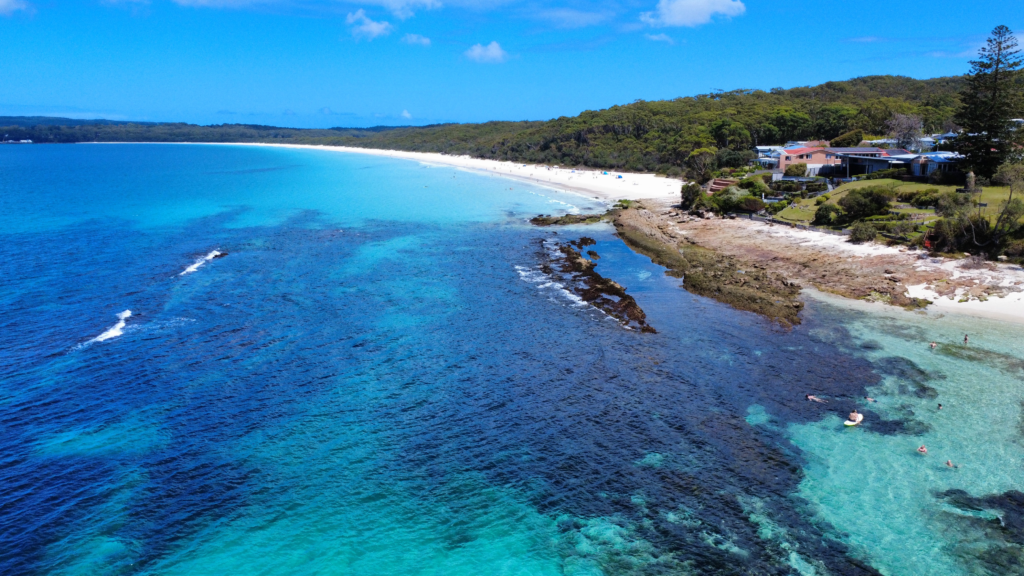
For us, the East Coast is perfect.
You could start around Sydney and slowly work north, or fly into Brisbane and concentrate entirely on Queensland.
Whichever route you choose, the principle is the same:
Travel less. Experience more.
1. Flights: Budget £2,500
Let’s start with the obvious big one.
Getting four people to the other side of the planet is never going to be cheap.
But perhaps not quite as expensive as you think.
We travelled from the UK to Australia between March and April and paid £620 return per person.
For a family of four, that’s £2,480.
And there can be another unexpected bonus here.
Some airlines flying between Europe and Australia offer stopover programmes, including complimentary hotel stays on qualifying tickets. If your flight already requires a transfer, it’s worth checking whether you can turn it into a couple of nights exploring somewhere else without adding another hotel bill.
Suddenly your four-week Australian adventure might come with a bonus mini-break on the way.
Budget remaining: £7,500
2. Accommodation: Budget £2,000
This is where you can absolutely destroy your budget if you’re not careful.
Twenty-eight nights at £150 per night is £4,200.
Before you’ve eaten anything.
Before you’ve hired a car.
Before you’ve seen a kangaroo.
So this is where we’d be smart.
During our travels we paid around £450 for a week in Hervey Bay, including access to a pool.
In Ballina, we paid approximately £1,500 for three weeks — again with a pool.
Neither involved sacrificing comfort to save money.
The big difference is that we travel slowly.
Instead of changing accommodation every couple of nights, look for weekly rates. Stay outside the most obvious tourist hotspot. Consider holiday parks and apartments rather than automatically searching for hotels.
And always — always — look for cooking facilities.
We’ll come back to why shortly.
We’ve since discovered house sitting too, which takes this concept to another level. Looking after somebody’s home and pets while they’re away can reduce your accommodation cost to effectively zero.
You don’t need to house sit to make our £10,000 challenge work.
But even one week-long sit could release hundreds of pounds for something considerably more exciting.
Budget remaining: £5,500
3. Car Hire & Transport: Budget £1,000
We paid approximately £700 for a month’s car hire, including free transfers to and from Sydney Airport.
For the freedom it gave us, that’s fantastic value.
Australia is made for road trips.
Some of our favourite memories weren’t necessarily the places we’d planned to visit.
They were the things we found between them.
A random beach.
A lookout.
Wildlife appearing somewhere completely unexpected.
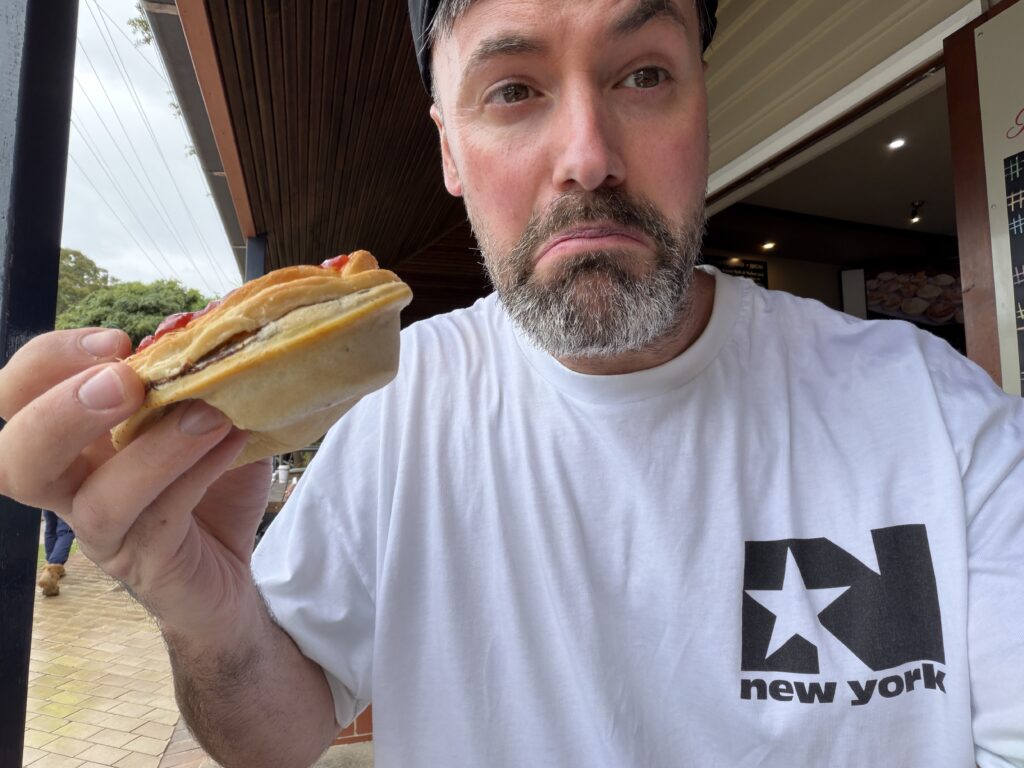
A bakery we stopped at because everyone was hungry.
But here’s something we’d do differently next time:
Don’t automatically hire a car for every day of your trip.
If you’re spending several days in a major city, check the public transport first.
And if you’re in Queensland, definitely check it.
Queensland’s Ridiculous 50-Cent Public Transport
This deserves its own mention.
Public transport fares across the Translink network in Queensland are currently just 50 cents per journey.
That’s not 50 cents per stop.
It’s 50 cents for the journey.
And it’s available to visitors too.
Buses, trains, ferries and trams are included across South East Queensland, with Airtrain being a notable exception.
At roughly 25p per journey, paying hundreds of pounds for a hire car to sit in a hotel car park suddenly starts looking rather silly.
Hire the car when you need it.
Use Australia’s excellent public transport when you don’t.
Budget remaining: £4,500
4. Food: Budget £1,000
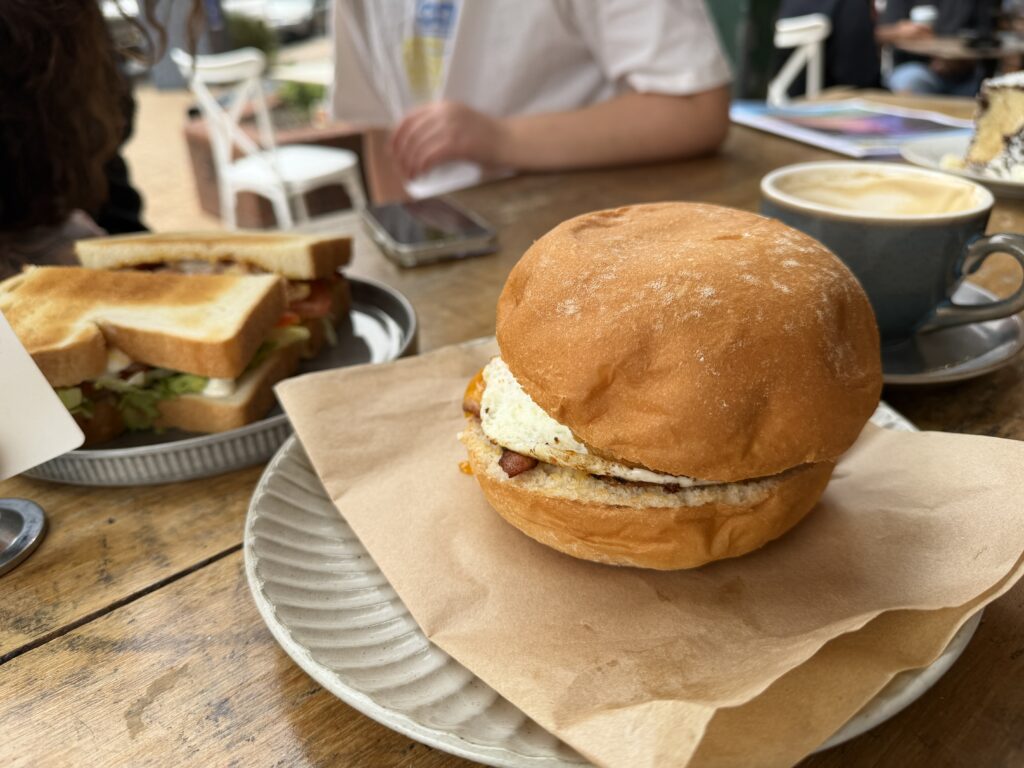
This is another area where your choice of accommodation suddenly becomes important.
We mostly ate at home during our Australian travels and spent around £25 per day on food.
Over 28 days that’s about £700.
That doesn’t mean we never ate out.
We absolutely did.
But we weren’t spending money on three restaurant meals every day simply because we’d booked accommodation without a kitchen.
Breakfast at home.
Make a packed lunch some days.
Use Australia’s brilliant public BBQ facilities.
Cook dinner occasionally.
Then when you find somewhere you actually want to eat, go and enjoy it.
There’s a massive difference between being careful with money and removing all the enjoyment from your holiday.
Our approach has increasingly become:
Don’t spend money eating somewhere because you have to. Spend it somewhere because you want to.
And that brings me to one of our more important pieces of Australian financial advice.
Find Dan Murphy’s early.
We didn’t.
Alcohol in Australia isn’t cheap, and discovering their offers considerably earlier in the trip would have been helpful!
Budget remaining: £3,500
5. Now Spend Some Proper Money: £1,500
This is the bit where some budget travel guides lose me.
You’ve just travelled halfway around the planet.
Please don’t spend four weeks refusing to do anything because it costs money.
We’d deliberately put aside around £1,500 for the big stuff.
The things you’ll talk about when the holiday is over.
During our Australian travels we spent:
Australia Zoo — around £90
Sunset cruise in Hervey Bay — around £50, with kids travelling free
And then there was our monster splurge:
Lady Elliot Island — around £650 for a Great Barrier Reef day trip, including return flights.
£650 is an enormous amount of money for a day.
I’d pay it again tomorrow.
That’s the entire point of travelling smartly elsewhere.
We’re not eating breakfast at home because our lifelong ambition is to save £20 on scrambled eggs.
We’re doing it so that when an opportunity comes along to fly our family onto an island on the Great Barrier Reef, we can say:
Yes. Let’s bloody do it.
6. Australia’s Secret Weapon: £0 Days
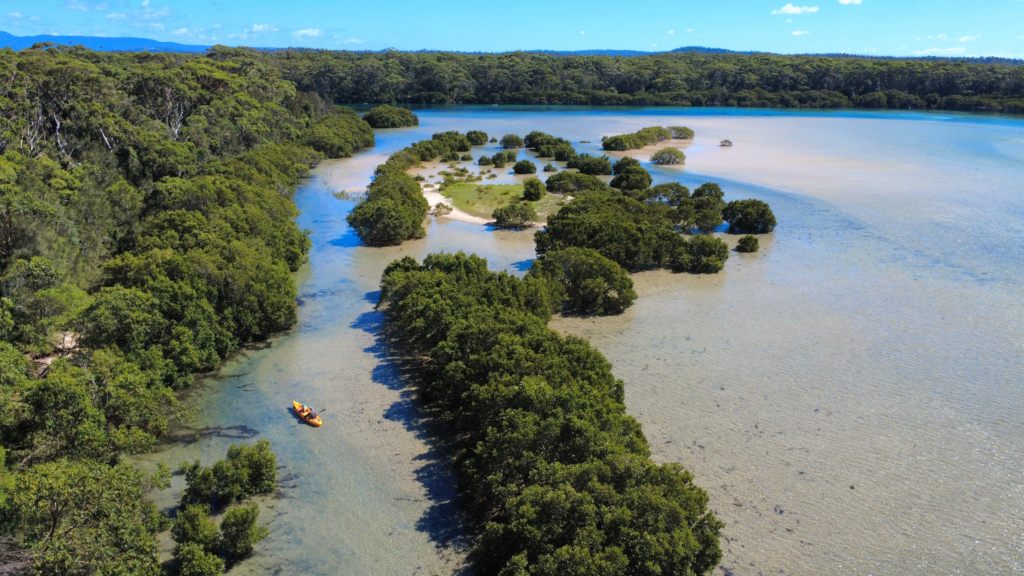
Here’s the bit that surprised us most.
Some of our best days in Australia cost absolutely nothing.
Not cheap.
Free.
And I’m not talking about sitting in your accommodation watching Australian television because you’ve run out of money.
I’m talking about proper WOW days.
Minyon Falls
An absolutely spectacular waterfall surrounded by rainforest.
Cost to admire it?
£0.
Protestors Falls
Another ridiculous walk through Australian rainforest to an incredible waterfall.
£0.
Noosa National Park
Coastal walks, beaches, wildlife and scenery that people would happily pay money to experience elsewhere.
£0.
Whale Watching in Hervey Bay
We paid for experiences in Hervey Bay.
But we also simply watched whales from the coast.
For free.
Kangaroo Spotting
One of the things children most want to see when you tell them they’re going to Australia.
And you absolutely don’t need to visit a wildlife park every time you want to see one.
We had countless wildlife encounters simply because we were outside looking.
Australia itself is the attraction.
Plan £0 Days On Purpose
This might be one of the best pieces of advice in this entire article.
Don’t have a free day because you’ve run out of money.
Plan one.
Beach.
Waterfall.
National park.
Wildlife spotting.
Picnic.
Playground.
Sunset.
If you have two or three £0 activity days during a week, suddenly spending £500 on something extraordinary doesn’t seem quite as destructive to the budget.
And that’s our philosophy.
We don’t want every day to be cheap.
We want enough £0–£30 days that we can afford the occasional:
HOLY SHIT THAT WAS AMAZING day.
Avoid Australia’s Peak Season If You Can
Timing can have an enormous impact on this budget.
Remember that Australia’s seasons are opposite to ours in the UK.
December and January might look incredibly appealing when you’re sitting through a British winter, but they coincide with Australia’s summer and long school holidays.
Demand rises.
Flights get more expensive.
Accommodation gets more expensive.
And popular destinations get considerably busier.
If you have flexibility, travelling outside those periods can make an enormous difference.
Our £620 return flights were for travel during March and April.
And here’s something particularly interesting for British families:
Don’t immediately dismiss our summer holidays.
July and August are winter in Australia.
Obviously Australia is enormous and the climate varies massively, but winter in Queensland is a rather different proposition from winter in Manchester.
Do your research on the specific region rather than assuming Australia needs to be a Christmas trip.
Don’t Waste Money Moving Around
This one comes directly from experience.
We hired our car for a month with the intention of returning it to Sydney.
Towards the end of the trip, we were a very long way from Sydney.
And Poppy wasn’t particularly enthusiastic about the prospect of sitting in a car for approximately 16 hours while we drove it back.
Can’t imagine why.
So we ended up paying for flights from Brisbane to Sydney simply to solve a logistical problem we’d largely created ourselves.
Would we plan it like that again?
Nope.
This is why your route matters.
Look at where you’re collecting the car.
Look at where you’re returning it.
Check one-way fees.
Work out whether you’re unnecessarily doubling back.
And don’t underestimate Australian distances.
Something that looks vaguely nearby when you’re looking at a map of the entire continent can be nine hours away.
And Don’t Pay for Something Just Because It’s Famous
K’gari was one of our more expensive Australian experiences.
And this might be controversial…
We probably wouldn’t spend the money again.
Not because K’gari isn’t beautiful.
It absolutely is.
But by that point we’d already experienced so many extraordinary beaches, landscapes and wildlife encounters that the cost didn’t feel justified for us.
That’s an important distinction.
Someone else might visit K’gari and declare it the greatest day of their holiday.
The lesson isn’t “don’t visit K’gari.”
It’s:
You don’t need to book every famous Australian experience.
Choose the ones that genuinely excite your family.
Spend big on those.
And don’t feel remotely guilty about skipping the others.
So… Can a Family Travel Australia for Four Weeks for Under £10,000?
Here’s our challenge:
| Expense | Budget |
|---|---|
| Return flights from UK | £2,500 |
| Accommodation | £2,000 |
| Car hire & transport | £1,000 |
| Food & drink | £1,000 |
| Big experiences | £1,500 |
| Insurance, fuel & miscellaneous | £1,000 |
| TOTAL | £9,000 |
Which leaves us with something rather lovely.
£1,000 contingency.
Flights change.
Fuel costs money.
Someone decides they desperately need a stuffed kangaroo.
Dad discovers another brewery.
Things happen.
But even allowing for that entire £1,000 disappearing, we’ve reached our target.
£10,000.
Four people.
Four weeks.
Return flights from Britain.
And a proper Australian adventure.
Spend Less on the Forgettable Stuff
If long-term travel has taught us anything, it’s that travelling affordably doesn’t mean choosing the cheapest option every time.
It’s about deciding what deserves your money.
I don’t care whether the apartment we slept in had a marble reception desk.
I do care that we flew over the Great Barrier Reef together.
I don’t need a fancy restaurant every lunchtime.
I’d rather make sandwiches and spend the money watching wildlife somewhere extraordinary.
And I definitely don’t need to change accommodation every two nights simply so I can say we’ve visited another town.
Spend less on the things your family won’t remember.
Then spend unapologetically on the things they will.
Could Your £10,000 Holiday Be Australia?
Perhaps that’s the bigger question.
Because £10,000 is obviously an enormous amount of money.
I’m not suggesting otherwise.
But plenty of British families will spend many thousands of pounds on their big annual holiday.
Two weeks in an all-inclusive resort.
A villa somewhere in Europe.
Florida.
Disney.
A cruise.
And there’s absolutely nothing wrong with any of those.
But if Australia is somewhere you’ve always dreamed of taking your family, perhaps the question isn’t:
“How could we possibly afford Australia?”
Maybe it’s:
“What could our existing family holiday budget buy us if we travelled differently?”
Because you don’t need a luxury hotel every night.
You don’t need a paid attraction every day.
You don’t need to visit every famous destination.
And you definitely don’t need to see all of Australia in one trip.
Travel slowly.
Stay somewhere with a kitchen.
Use public transport.
Have £0 days.
Spend money on the experiences that genuinely matter to you.
And that ridiculous family adventure on the other side of the world might be considerably more achievable than you thought.
Nadam Travels can help; we’ve different area of Australia on numerous occasions which has helped us build a wealth of knowledge that we’ve built into our Bespoke Travel Planning services. See all the details here.
£10,000. Four people. Four weeks in Australia.
We’d do it in a heartbeat.
Leave a Reply