
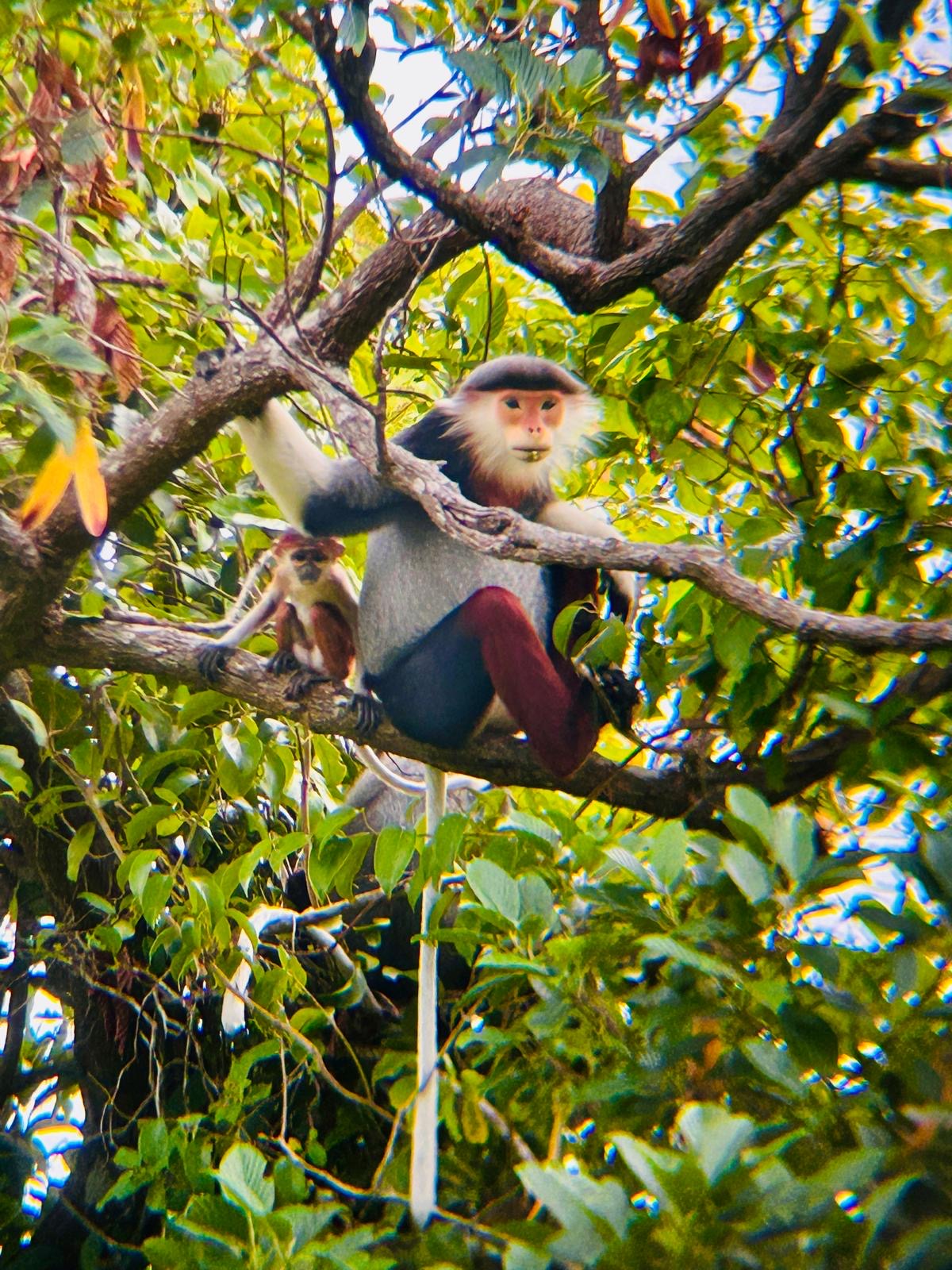
5am starts while travelling are reserved for flights, trains or very special adventure days. This one was definitely the latter.
Truth be told, I woke up at 3:30am with excitement. Today we were heading up Da Nang’s Son Tra Peninsula — better known to many visitors as Monkey Mountain — in search of one of Vietnam’s most extraordinary animals: the red-shanked douc langur.
We’d researched and booked our small-group wildlife tour through GetYourGuide and, after checking the experience and its approach to viewing the monkeys, we were happy to book.
A 5:30am start in Da Nang
Our guides collected us bang on 5:30am from our hotel. After a quick chat and introduction, we hopped onto the motorbikes and set off through Da Nang.
There was something quite magical about riding through the normally bustling city at that time of the morning. The streets were quiet, the temperature was actually pleasant, and the rest of Da Nang seemed to be only just waking up.
And then, within around 10 minutes of getting on the bikes, we saw them.
Our first red-shanked douc langurs
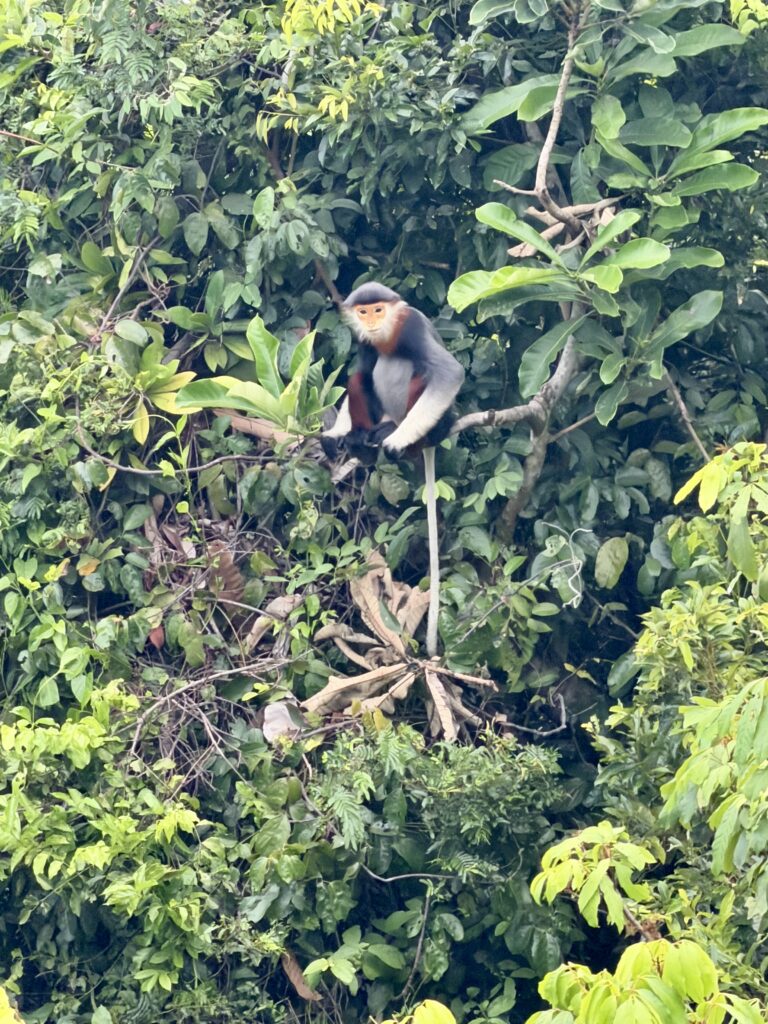
Only a few metres away in the trees were the monkeys we’d got up at stupid o’clock hoping to find.
And they were BEAUTIFUL.
The male troop were making the most of the cooler, dry morning and were incredibly active, jumping from tree to tree while we watched from below.
We spent around 45 minutes simply watching them.
This was exactly what we’d hoped for: observing wild animals in their natural habitat without feeding them, touching them or trying to interfere with what they were doing.
And frankly, we’d already have gone home happy at this point.
But we weren’t even close to finished.
Monkey Mountain might have some of the best views in Da Nang
After a quick hydration break, we continued further up the mountain.
Even if we’d somehow seen zero monkeys, the scenery alone would have made the early alarm considerably less offensive.
At points we had sea, mountains and the Da Nang cityscape all in the same view.
If you’re visiting Da Nang, Son Tra Peninsula deserves a place on your itinerary for the scenery alone.
But then our guides took us around the top of the mountain to another viewing area — and somehow our morning got even better.
And then we found the babies…
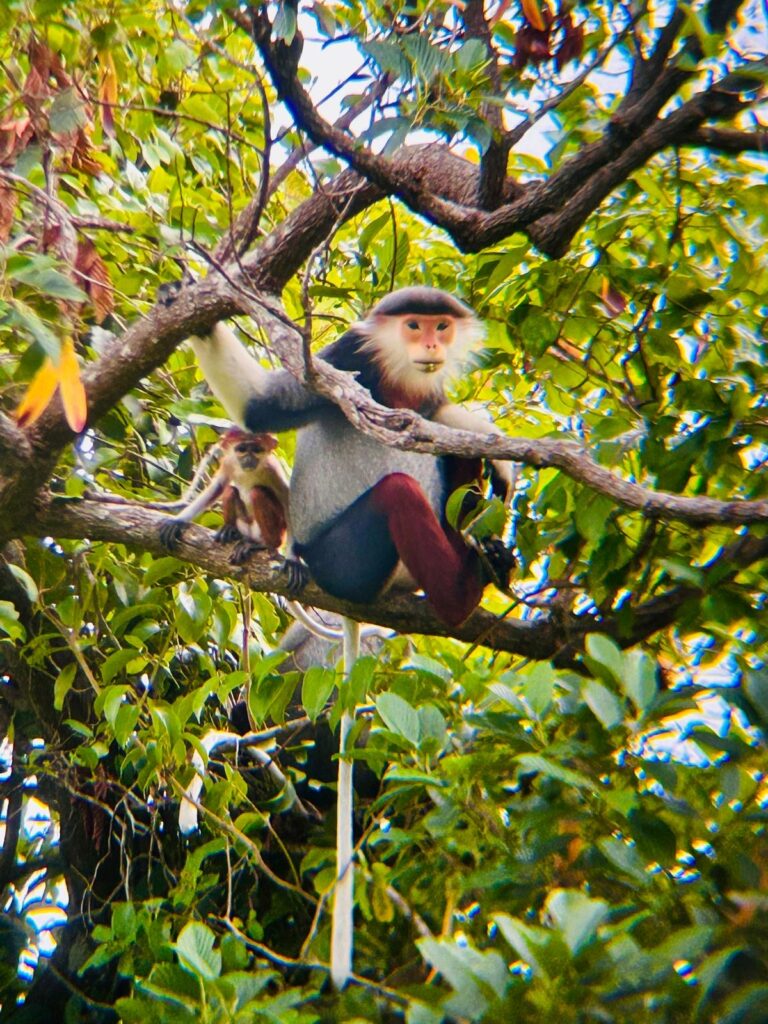
We came across another family troop.
Including two babies. 🥹
Our guides told us they hadn’t seen the babies for around three weeks, so we felt ridiculously fortunate to have found them that morning.
We spent another 20 minutes or so watching the family from a respectful distance before eventually dragging ourselves away.
From there, we headed down to a viewpoint where our guides gave us local fruit while we looked out across Da Nang.
Not a bad way to spend a morning.
Was the Monkey Mountain tour worth it?
Absolutely.
In fact, I’m genuinely tempted to book it again before we leave Da Nang.
Everything worked for us: the guides, the motorbikes, the ridiculously beautiful views, the early timing and — most importantly — getting the opportunity to observe these incredible monkeys in the wild.
Wildlife sightings can obviously never be guaranteed, which is part of what makes an experience like this so special. These aren’t animals performing on demand; you’re entering their habitat and hoping you’re lucky enough to see them.
We certainly were.
What to know before booking
The tour we booked had a 100kg weight limit for the motorbike element.
I was slightly over this — I’ve been travelling for seven months non-stop, don’t judge me 😂 — so I contacted the tour operator before confirming our booking.
They were able to advise me directly, but if you have any concerns about weight limits, mobility, riding on a motorbike or anything else that could affect your experience, I’d strongly recommend contacting the operator before booking rather than assuming it’ll be fine.
I’d also recommend:
- Wearing comfortable clothes and suitable footwear.
- Taking water, although we had a hydration stop.
- Bringing binoculars if you have them.
- Taking a camera with a decent zoom rather than trying to get physically closer to the wildlife.
- Being prepared for an early start — it’s worth it!
Why are red-shanked douc langurs so special?
Red-shanked douc langurs are native to Southeast Asia and Vietnam is one of the most important places in the world for their conservation.
Son Tra Peninsula is particularly special because a significant population lives remarkably close to the city of Da Nang.
And honestly? Photographs don’t quite prepare you for them.
Their grey bodies, white faces, reddish legs and extraordinary colouring make them look almost unreal when you first spot one sitting in the trees.
Seeing them in the wild was easily one of our favourite wildlife experiences in Vietnam so far.
Would we recommend it for families?
For families with children who are comfortable riding on a motorbike and genuinely interested in wildlife, we’d absolutely consider this one to investigate.
As always, check the tour operator’s current age, weight and participation requirements before booking, because these can change and may differ between tours.
This also isn’t a zoo-style animal encounter. That’s exactly why we loved it.
You have to get up early. You have to look for them. And there’s no guarantee they’ll decide to show up.
But when you’re standing quietly beneath the trees and suddenly spot a red-shanked douc langur staring back at you?
Worth every minute of the 5am start.
Leave a Reply